Product Designer · Full Ownership
SaaS
Consumer AI

Problem
Everyday users designing their space with AI could generate endless options but couldn't decide, compare, or commit to any of them, because generation had outpaced the tools to evaluate it.
Why it mattered
Without a way to evaluate, users stalled in an exploration loop instead of reaching a finished design, turning a fast generation tool into a dead end at the moment of decision.
Executive Summary
In 2023, as generative AI was just emerging, Foyr launched Ideate, a consumer sub-product of its professional design suite. Where the pro tools demand CAD-level skill, Ideate lets everyday people prompt and visualise their own space, from a room to a whole home. This project focused on what happens after generation, when users have options but no way to evaluate them.
Discovery
Competitive research into how users engage with AI generation tools surfaced three friction points that shaped the design direction.
Users generated endlessly but couldn't compare outputs
No anchor to judge one option against another
Missed-intent outputs eroded confidence before commitment
Key Product Decisions
Decision 1
Progressive decision steps vs open-ended generation
Hypothesis
If we structure generation into sequential decision steps, users will move from exploring to committing faster and regenerate less.
Why
Users could generate freely but struggled to determine what to refine or commit to.
Decision
Structure the experience around sequential decision steps that guide users from exploration to commitment, giving them an anchor to judge against at each stage.
Considered instead
Open-ended generation letting users prompt freely and compare outputs themselves. Rejected because it helped users choose but not decide what to refine first.
Trade-off
Removed the freedom to explore openly in exchange for a more directed experience.
Decision 2
User control vs full AI automation
Hypothesis
If users can refine, override, or narrow AI suggestions at each stage, they will commit with more confidence and less second-guessing.
Why
Users needed confidence before committing, and some struggled when outputs missed their intent.
Decision
Allow users to refine, override, or narrow AI suggestions at each stage.
Considered instead
Full automation with a single regenerate button. Rejected because it removed the authorship users needed to commit.
Trade-off
Slightly slower interactions in exchange for stronger decision confidence.
Design Direction
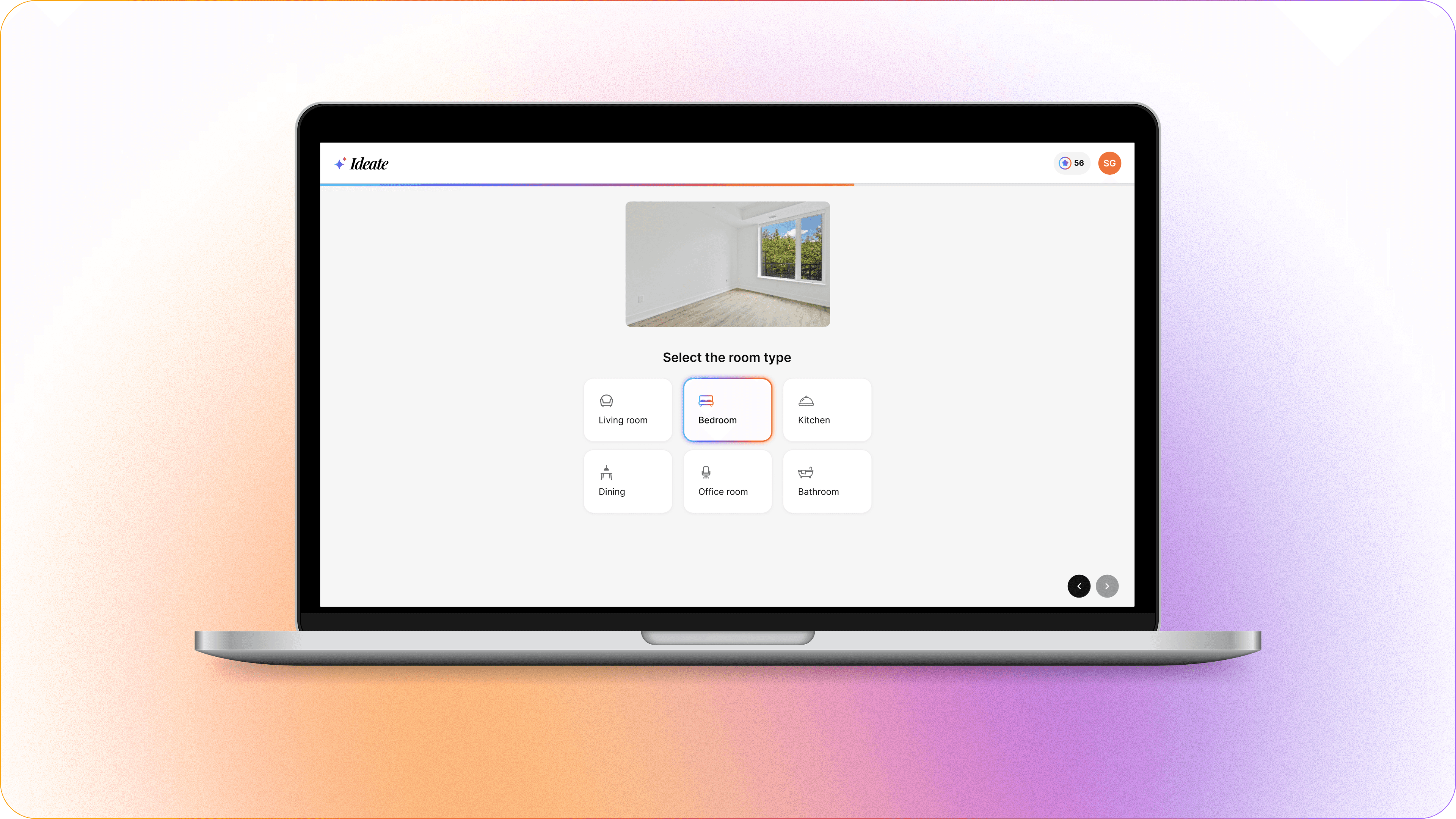
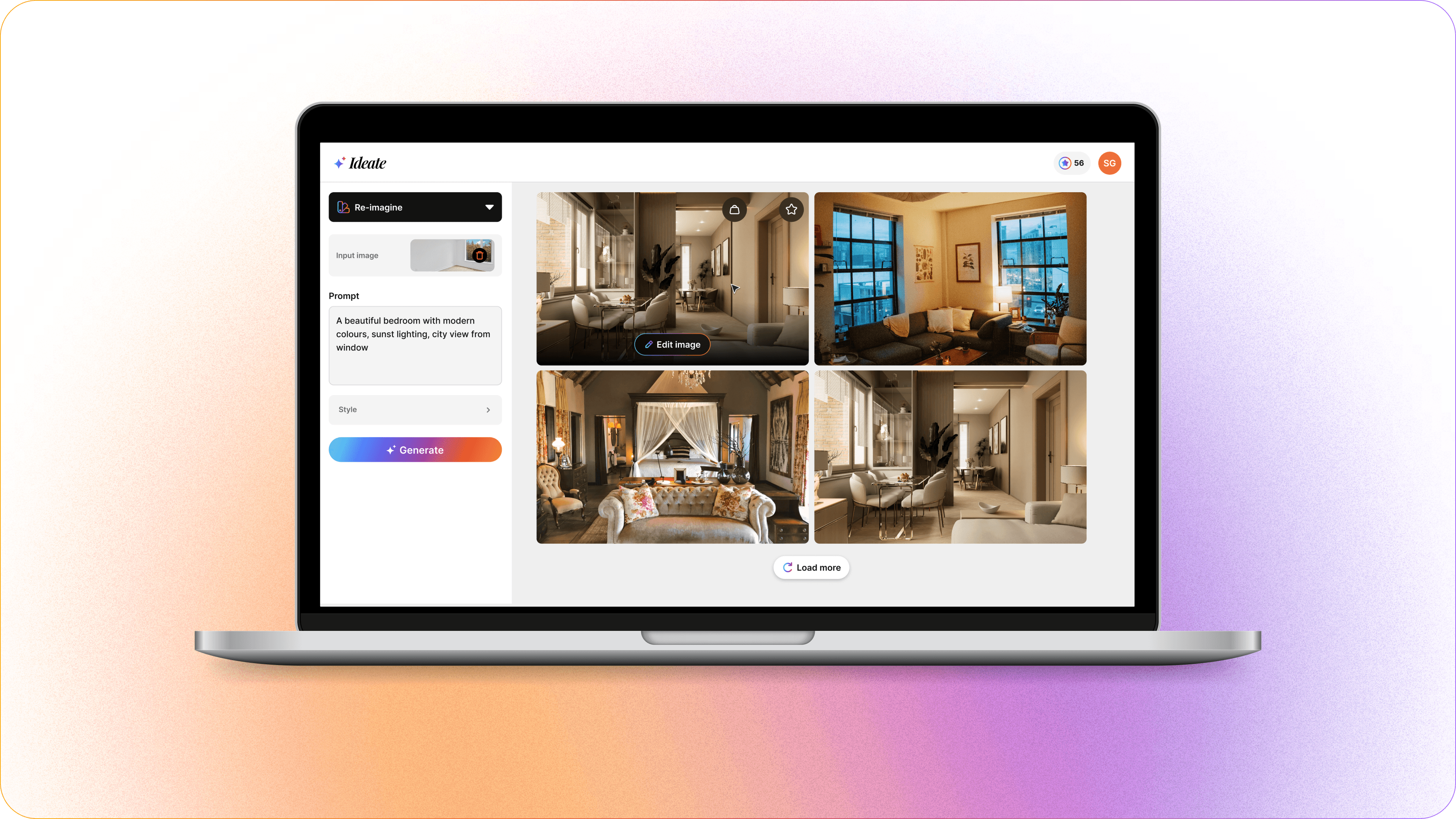
Refreshing Existing Spaces
Users explore alternative layouts, styles, and decor for rooms they already live in, using AI suggestions to rethink aesthetics and spatial arrangements while preserving the existing structure.
Users had an existing reference point: their own room. Starting from something known reduced the blank-canvas anxiety that open-ended generation was causing.
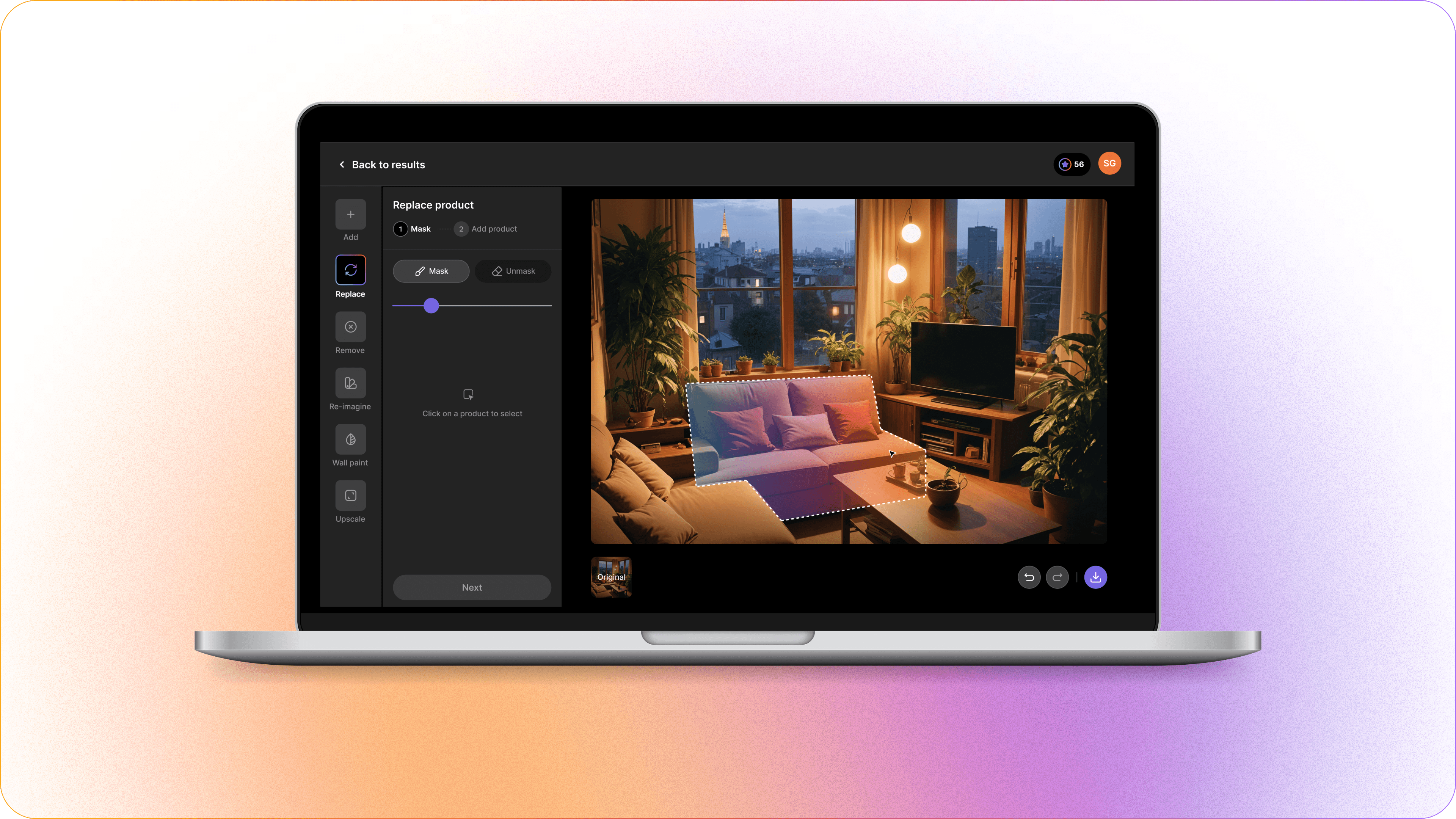
Customizing Spaces with Furniture
Users can add, replace, or remove furniture elements within a room, allowing them to explore different furniture options and configurations as part of their design.
Some users didn't need a full redesign; they needed to change one thing. A focused furniture path lets them act on a specific intent without reopening decisions already made.
Iteration Based on Early Use
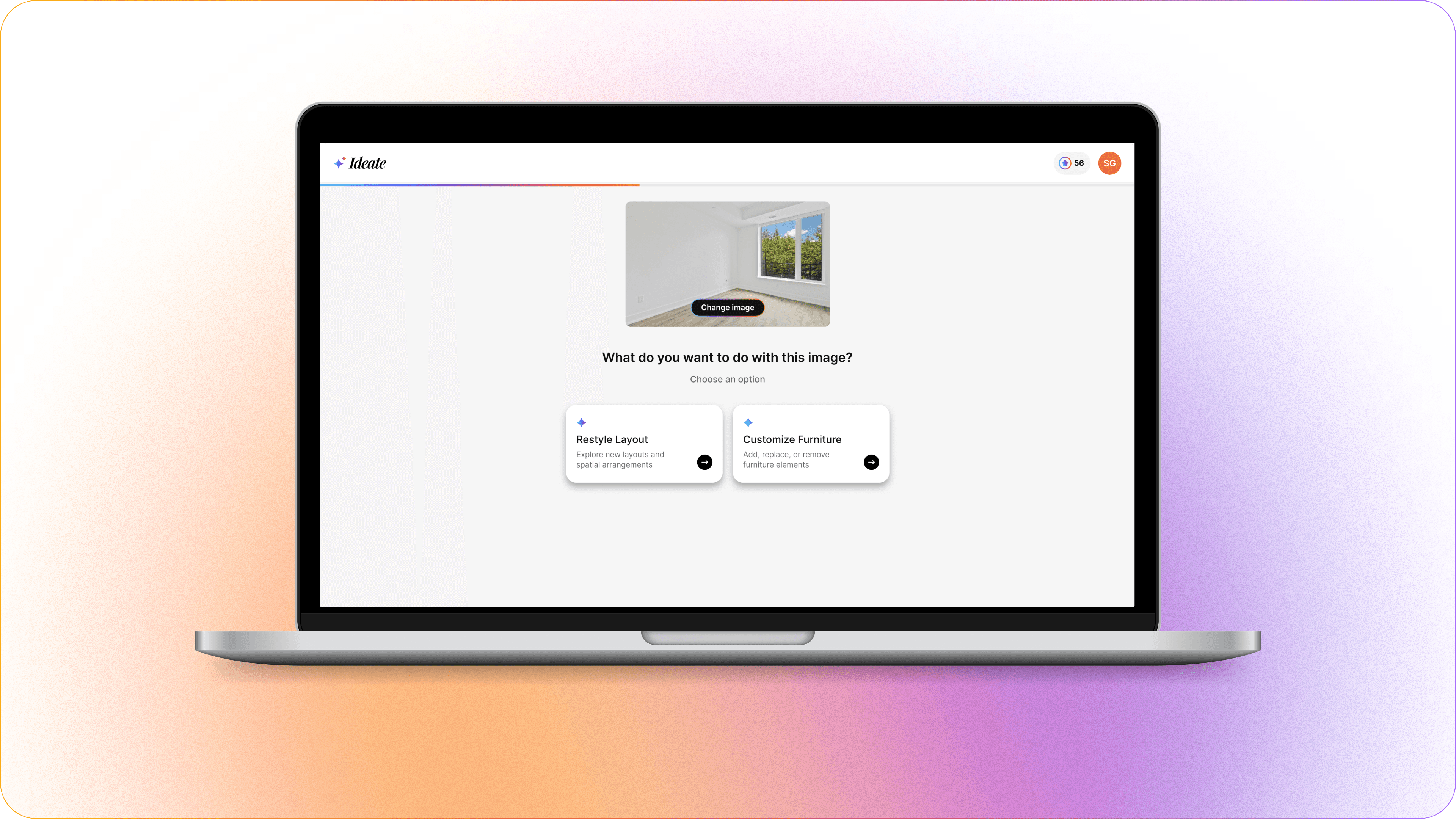
Direct Access to Furniture Customization
Users who wanted small, targeted furniture changes felt slowed down by broader redesign steps. Introducing a focused entry path allowed quicker updates without pushing users through unnecessary decisions. This reduced decision branching and helped users make progress without reopening earlier choices.
Next Steps
Letting users upload their own reference images to steer the AI, building on the same trust principle, and validating the flow with a broader launch.
Reflections
AI generation alone does not create value.
Structure only works when users can see their earlier choices reflected in the outcome.
How I would approach this differently today
What I got wrong
I invested in high-fidelity design before validating the core interaction model with real users.
What I learned
Testing flows interactively reveals what static screens cannot, how users actually move through decisions, not how we assume they will.
What I would do differently
I would prototype the decision flow in Lovable first and test it before moving to high-fidelity, with fewer assumptions and more evidence earlier.
Try the prototype yourself
As part of evolving how I work, I also ran this project through an AI-augmented UX audit framework I have been building, to re-examine where the deeper friction lived. You can see that output here.