Problem
Fragmented tools and delayed responses left users stuck at the point they were ready to act.
Impact
No clear path existed between finding a property and taking the next step.
Executive Summary
Realoqe is built for users who know what they want but cannot move forward. This project closed the gap between discovery and action.
Discovery
Real-estate journeys stall not because of lack of options, but because users struggle to act when intent forms due to fragmented discovery, delayed responses, and unclear next steps.
To understand how people navigate real-estate decisions, I studied established platforms such as Zillow, Redfin, Realtor.com, and emerging regional players.
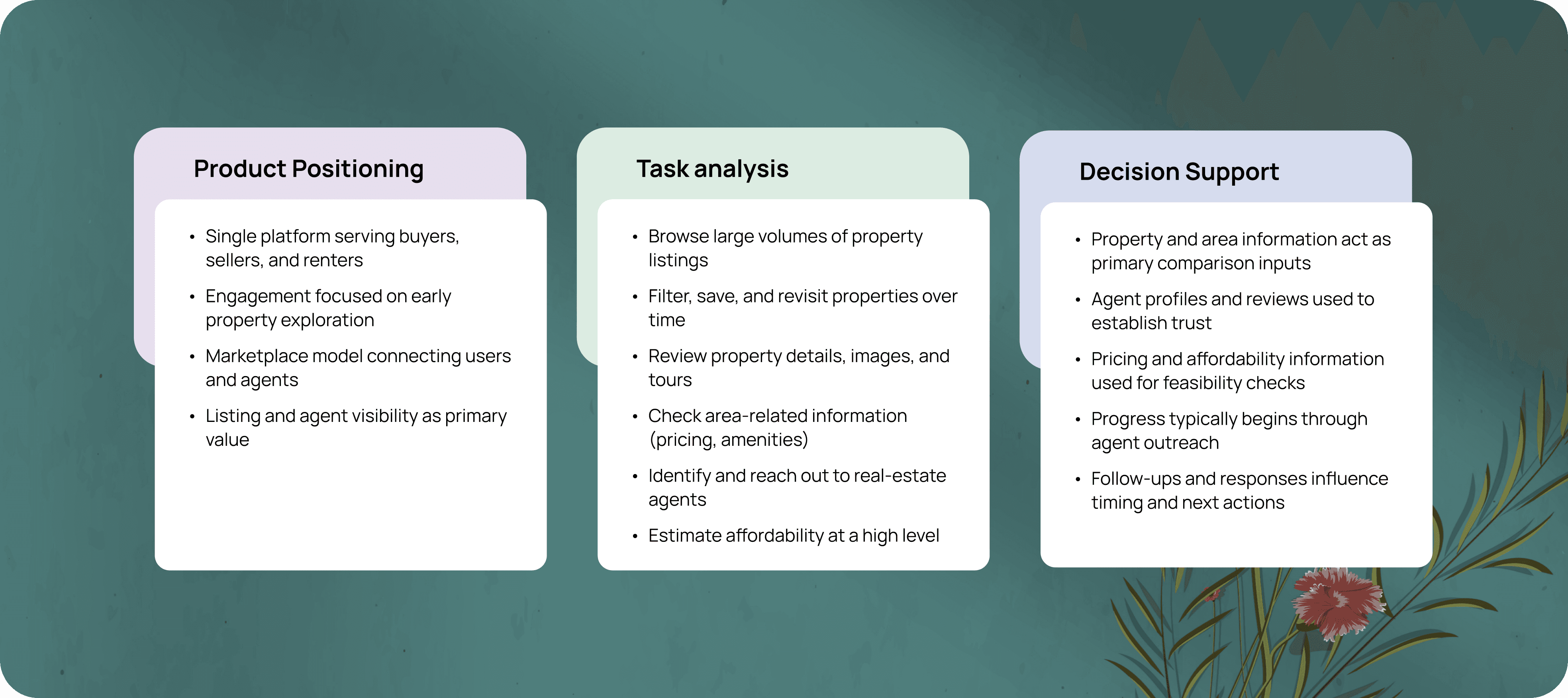
Key Product Decisions
Decision 1
Integrated flow vs fragmented tools
Why
Users lost momentum when discovery, evaluation, and communication happened across separate tools.
Decision
Collapse discovery, evaluation, and action into a single continuous experience.
Trade-off
Reduced depth of individual features in exchange for maintaining decision continuity.
Decision 2
Early action support vs passive browsing
Why
Users needed the ability to act immediately when intent formed.
Decision
Surface agent access and financial readiness earlier in the journey.
Trade-off
Risk of overwhelming users who were still in early passive browsing mode.
Design Direction
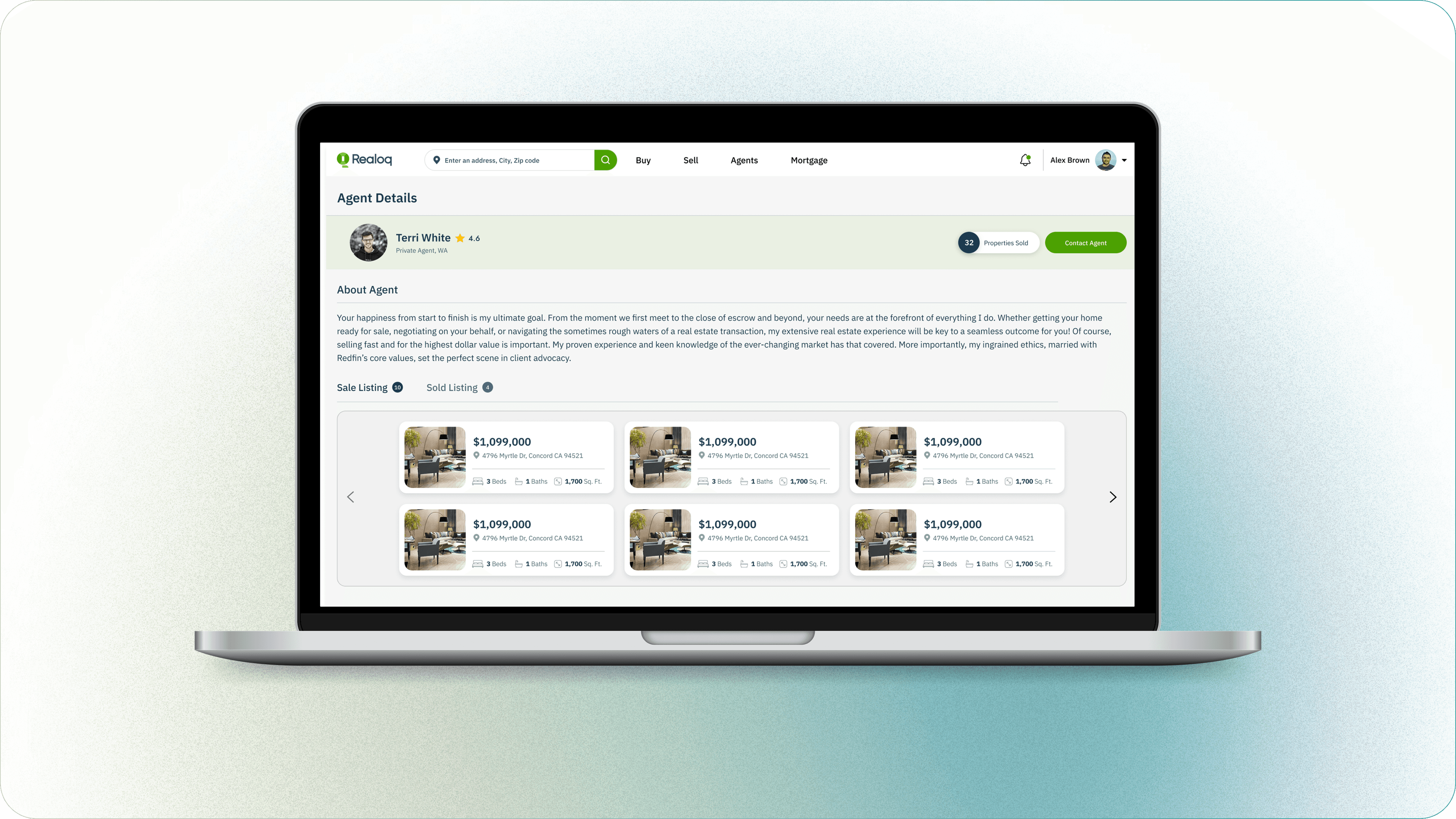
1. Instant Agent Discovery & Contact
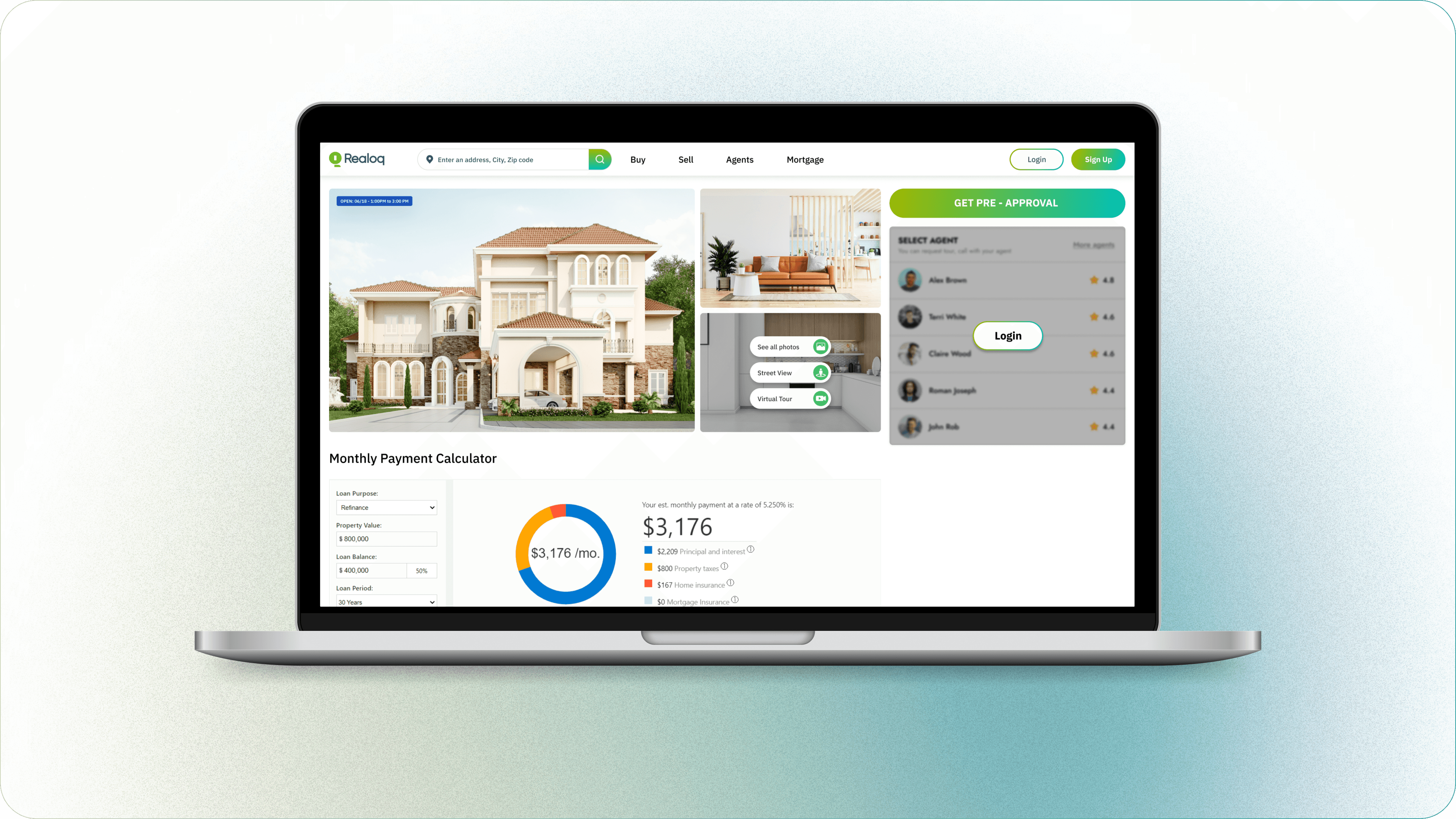
Agent discovery is integrated into the exploration flow, allowing users to identify and contact relevant agents as soon as interest forms. Clear profiles, reviews, and response expectations reduce delays between intent and action.
Integrating agent contact into exploration removed the step users were dropping off at.
3. Financial Readiness Within Exploration
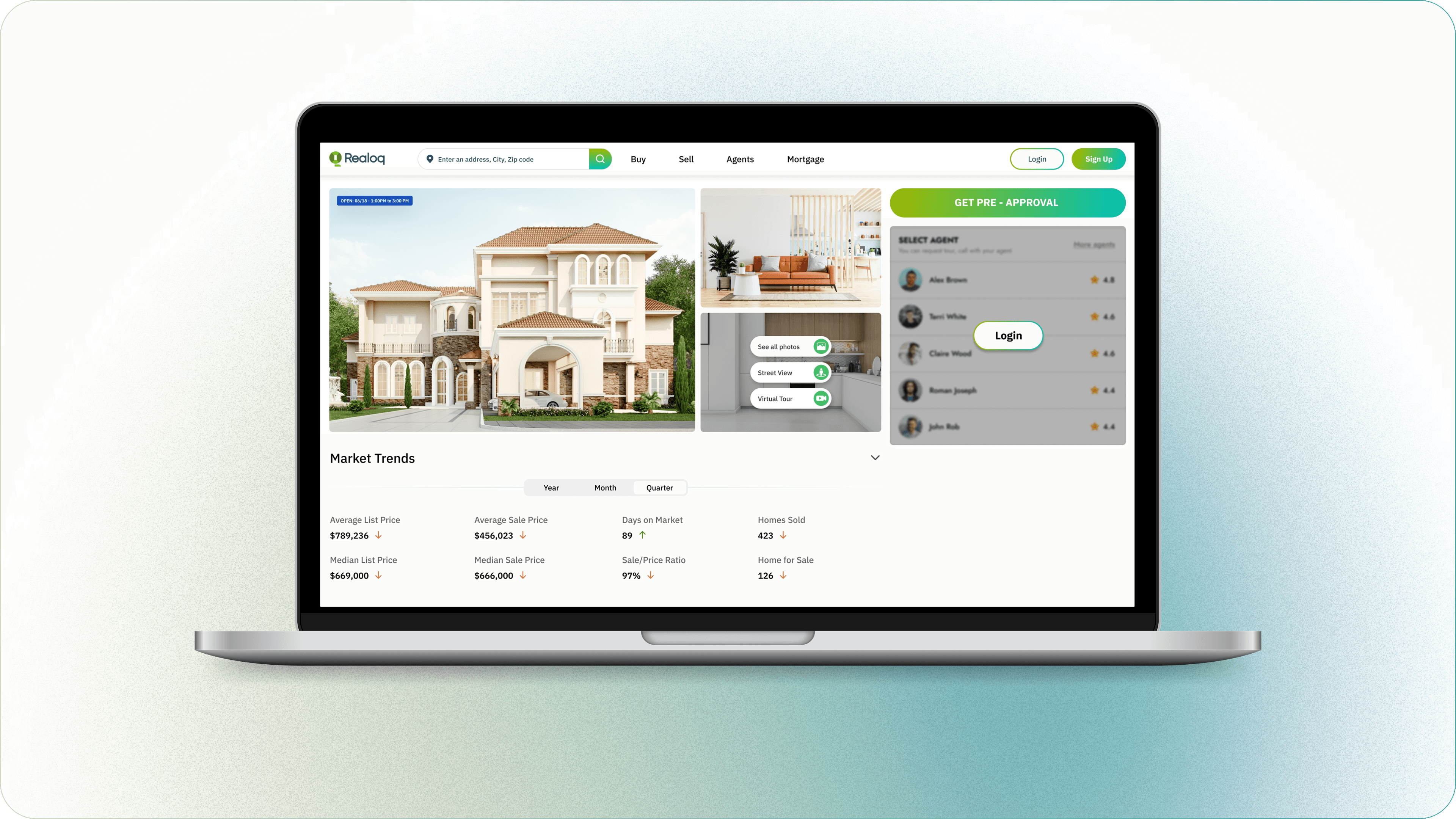
Affordability and mortgage guidance are embedded alongside listings, helping users assess financial feasibility while exploring options.
Users discovered affordability limits only after forming intent. Surfacing financial context earlier meant decisions were grounded before they became emotional.
Iteration Based on Early Use
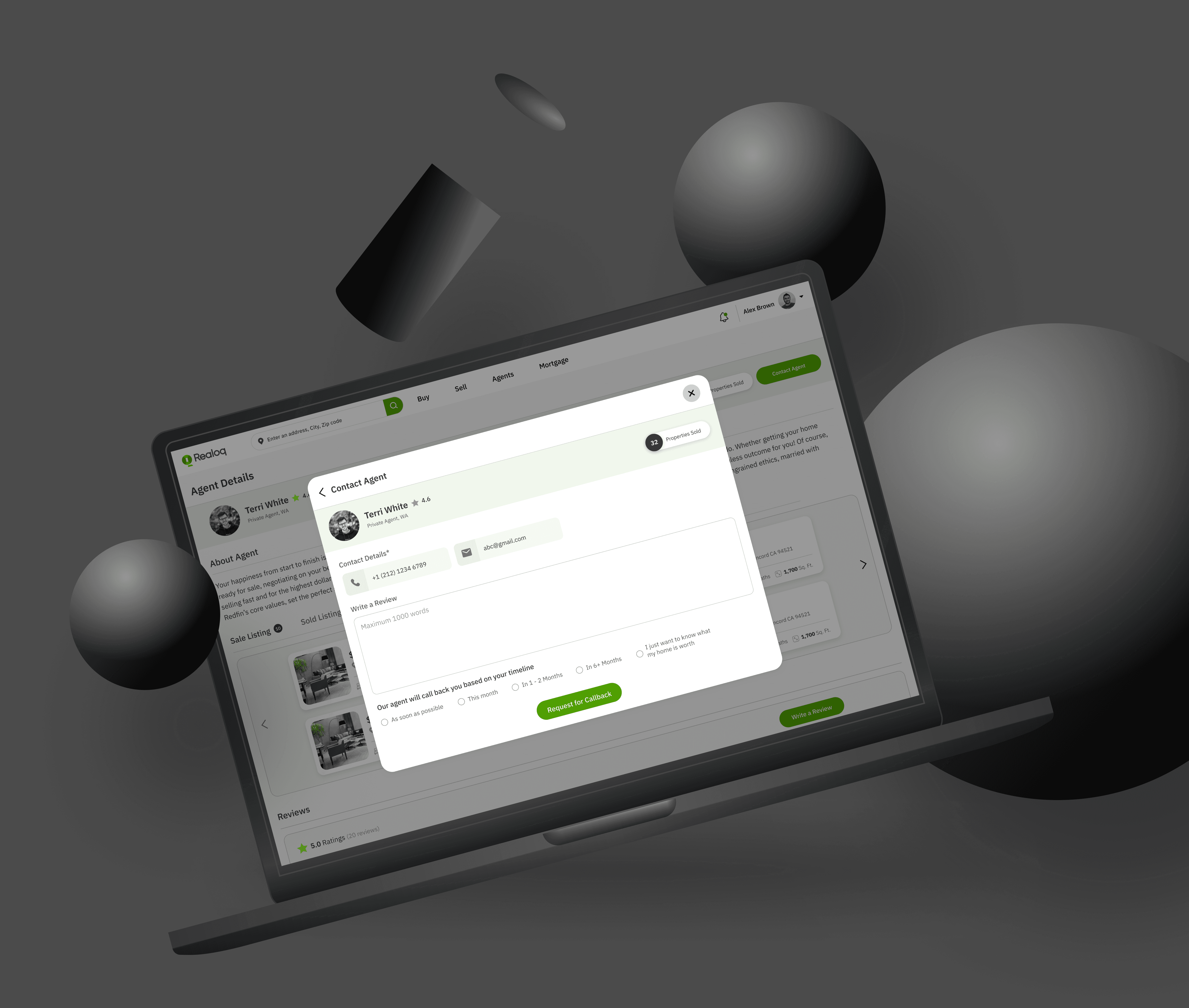
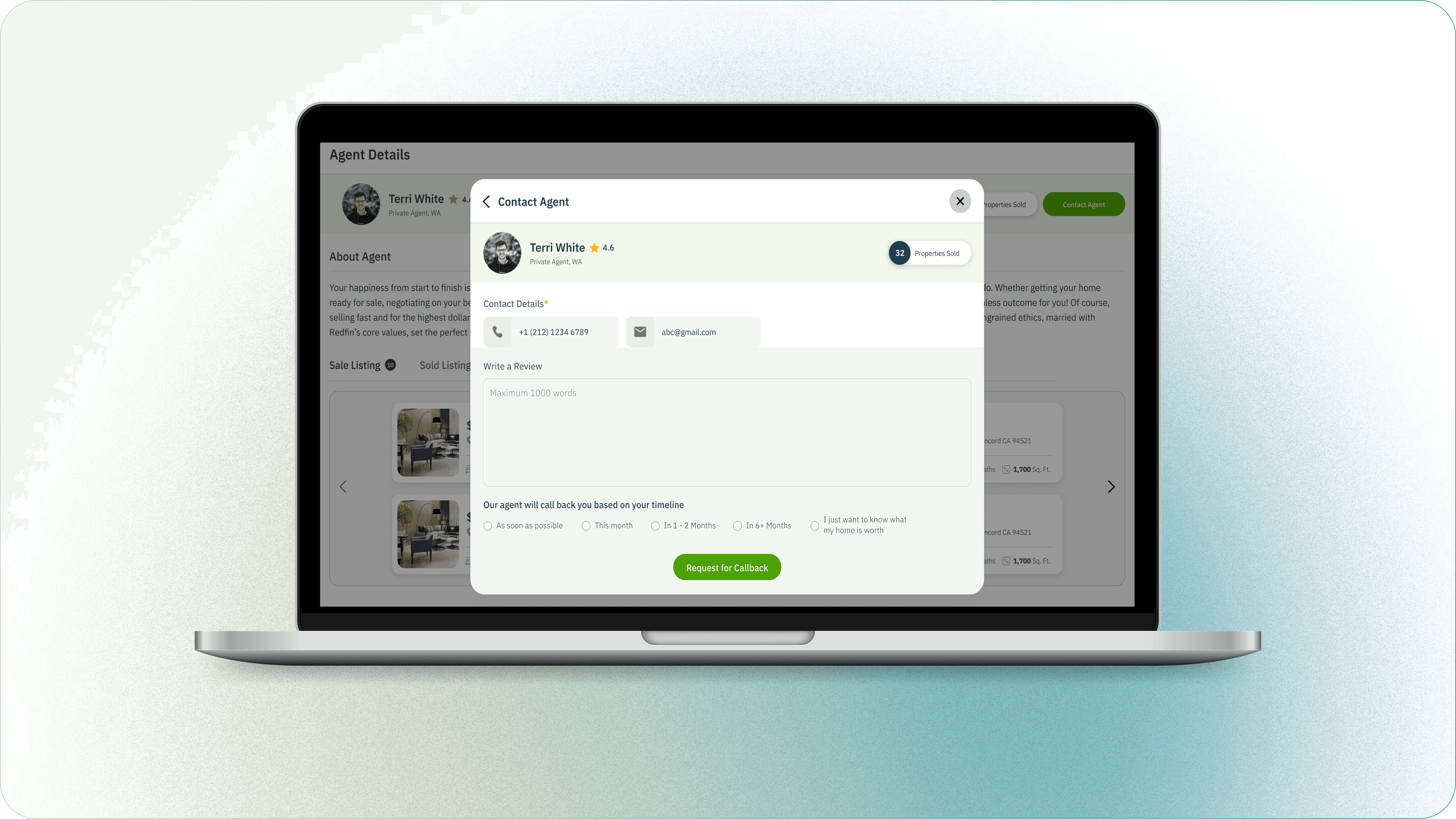
Issue: Users had to wait an entire day after receiving a generic “We will connect with you in 48 hours” message, creating uncertainty about next steps.
Solution: Introduced a personalized response-time preference, allowing users to choose when they wanted to hear back and making progress explicit.
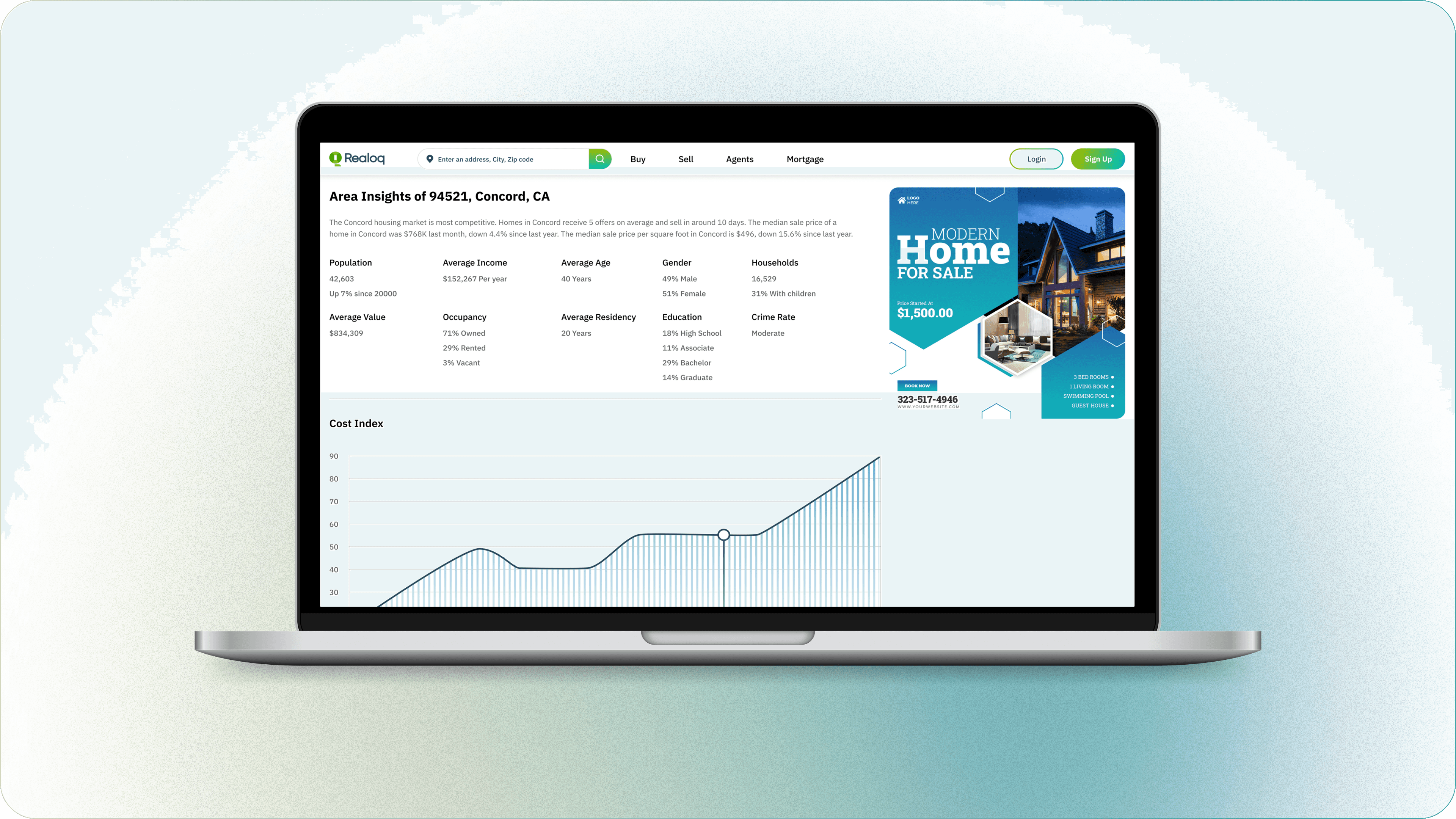
Issue: Buyers had to leave the platform to check accessibility, employment data, and area-level context during evaluation.
Solution: Integrated directly into Area Insights, keeping the full evaluation inside one view.
Outcomes
Behavior Change
Integrated tools were designed to reduce reliance on external platforms during property evaluation.
Agent contact within the listing was designed to remove the step between finding and reaching out.
Workflow Gains
A continuous flow was designed to keep more steps completable within a single session.
Inline research tools were designed to reduce platform fragmentation during evaluation.
User Confidence
Early financial context was designed to give users clarity before committing to next steps.
Explicit action signals were designed to help users distinguish exploration from decision moments.
Reflections
The bottleneck in complex decisions is rarely what users know. It is what they can do with what they know at the moment it matters.